
These Romanian Stuffed Grape Leaves with Lemon Dill Sauce, or Sarmale în Foi de Viță, as we call them back home, are a beloved comfort food in Romanian kitchens. Made with tender grape leaves wrapped around a savory rice and meat filling, then gently simmered and finished with a tangy lemon sauce, this dish brings a touch of nostalgia and warmth to every bite. It's the kind of hearty, flavorful meal that's perfect for gathering around the table with family and passing down from one generation to the next.

Unlike the tomato-simmered cabbage rolls or my Stuffed peppers you might associate with Eastern Europe, this variation uses grape leaves and gets finished with a light, creamy lemony broth infused with fresh dill, a little lemon juice, and sour cream.
The flavors are bright and herby, the texture is tender, and every bite feels like something passed down with love.
If you're familiar with Greek dolmades or Turkish dolmas, you'll recognize the shared Mediterranean roots, but Romania brings its own rustic, comforting touch to the table, one that's all about warmth, family, and a generous spoonful of sour cream on top.
Jump to:
- What Are Romanian Stuffed Grape Leaves?
- Recipe Ingredients
- Substitutions & Variations
- How to make Stuffed Grape Leaves with a Lemony Sauce
- Storage
- Tips for Making Stuffed Grape Leaves with Fresh Leaves
- Tips for Making Stuffed Grape Leaves with Canned Leaves
- Common Questions
- More Recipes You'll Love
- Recipe
- More Romanian dishes
What Are Romanian Stuffed Grape Leaves?
While the word dolma is more commonly associated with Middle Eastern or Turkish cuisine, Romania has its own delicious version of stuffed grape leaves that's just as comforting and full of flavor.
Romanian dolmas, known locally as sarmale în foi de viță, are tender grape leaves wrapped around a savory rice filling, often mixed with ground pork or ground beef, onions, parsley, dill. Unlike the tomato-simmered cabbage rolls many people know from Romanian holiday feasts, this variation uses grape leaves and is often simmered in a delicate lemony broth and finished with a creamy egg, sour cream and lemon sauce.
What makes Romanian dolmas unique is the balance of hearty and bright flavors from fresh dill, lemon juice, and a rich, herbaceous filling all come together in one satisfying bite. These are typically enjoyed as a main dish or served as a delicious appetizer at family gatherings and special occasions.
If you're familiar with Greek dolmades or Turkish dolmas, you'll recognize the shared Mediterranean roots, but Romania brings its own rustic, comforting touch to the table one that's all about warmth, family, and a generous spoonful of sour cream on top.
Recipe Ingredients
You'll need the following ingredients to make this delicious Stuffed Grape Leaves:

Ingredient Notes:
- Grape leaves are either from a jar or freshly picked if you're lucky enough to have a grapevine nearby.
- Ground pork brings rich flavor, though ground beef works just as well for a simpler take.
- White rice helps give the filling a soft and satisfying texture.
- Yellow onion, finely chopped, adds a gentle sweetness once cooked.
- Fresh herbs like dill and parsley brighten up the whole mixture beautifully.
- Salt and black pepper keep everything balanced and savory.
- Extra virgin olive oil adds moisture and rounds out the flavors.
- Water is needed to cover the rolls while they gently simmer.
- Lemon juice adds that irresistible tang to the broth.
- Bay leaves give the cooking liquid a warm, aromatic depth.
- Sweet paprika adds a warm, mild flavor and a pop of rich red color to your dish.
- Full-fat sour cream makes the sauce rich, creamy, and comforting.
- Egg yolk helps the sauce thicken just enough without getting heavy.
- Flour gently binds everything together for a smooth sauce texture.
See recipe card below for a full list of ingredients and measurements.

Substitutions & Variations
Here are some delicious ways to customize these Stuffed grape leaves:
- Add lamb: Layer a few lamb pieces at the bottom of the pot for extra flavor. So cozy and rich!
- Swap the meat: Use ground beef, lamb, chicken, or turkey instead of pork.
- Go meatless: Load up on rice, onions, and herbs and try adding mushrooms or carrots for texture.
- Change the grain: No white rice? Try long grain rice, brown rice (adjust cook time).
- Fresh or jarred leaves: Both work! Just soak jarred grape leaves in cold water to remove saltiness.
- Try cabbage leaves: A great backup if you're out of grape leaves, try Romanian sarmale!
- Try peppers: See this Stuffed peppers recipe on my website!
This recipe has not been tested with other substitutions or variations. If you replace or add any ingredients, please let us know how it turned out in the comments below!
How to make Stuffed Grape Leaves with a Lemony Sauce
1. Prep the grape leaves
If using fresh grape leaves, blanch in hot water for 2 minutes to soften. For jarred leaves, rinse thoroughly in cold water to remove the brine and cut the stems. Set them aside between paper towels to dry.
2. Make the filling
Add the chopped onion and 2 tablespoon olive oil to a pot, then cook over medium heat, stirring often, until the onion turns soft and golden for about 4 minutes.
In a large bowl, combine the sautéed onion, ground meat, rice mixture, chopped onion, fresh herbs, sweet paprika and seasoning. Mix well. This is your rice stuffing base, aromatic and savory. Let it sit at room temperature while you prep the leaves.
3. Roll the grape leaves
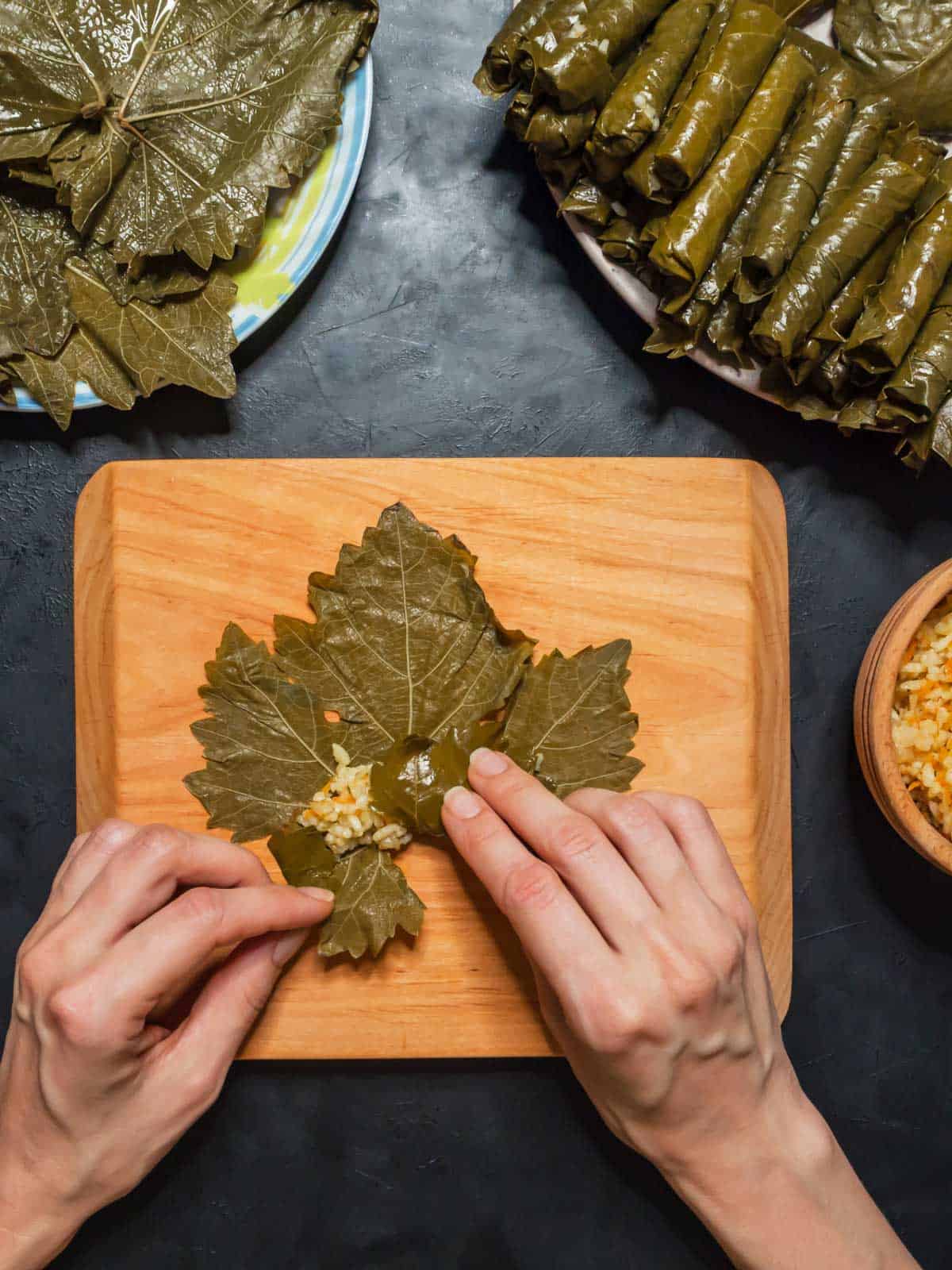
Lay one leaf shiny side down on a board, stem end facing you. Place a heaping teaspoon of the filling at the center of the leaf. Fold in the sides of the grape leaf, then roll up tightly. Repeat with the rest.
4. Layer and cook
In a deep pot or Dutch oven, line the bottom with extra leaves to prevent sticking and slices of lamb meat. Arrange the stuffed leaves in a single layer seam side down and very close together over the bed of leaves., then add a second and third layer. Tuck in bay leaves. Pour the lemon juice and olive oil over the stuffed grape leaves.
Pour in enough water to barely cover them. Place a small plate or heavy plate on top to keep them submerged. Cover the pot and cook over medium-low heat for about 1 hour or until the rice is tender and the flavors are melded.
Use this section for process shots, alternating between the step and image showing the step. Users don't like seeing process shots cluttering up the recipe card, so include your process shots here.
5. Make the Egg-Lemon Sauce
In a small bowl, whisk together the egg yolk and flour. Add in the sour cream, lemon zest, lemon juice, and fresh dill. Season with a little salt and pepper.
Now here's the key: temper the sauce by slowly whisking in a ladle of hot broth from the pot. Then pour the tempered mixture back into the large saucepan or cooking pot. Simmer on medium-low heat for 5-10 minutes, stirring gently until thickened. Do not boil, or the sauce may curdle.
Storage
- The cooked stuffed grape leaves keeps well in the fridge for up to 5 days.
- Roll the grape leaves ahead and refrigerate overnight for later use.
- Freeze uncooked rolls on a tray, then transfer to containers for long-term storage.
Tips for Making Stuffed Grape Leaves with Fresh Leaves
If you're lucky enough to have access to fresh grape leaves, maybe from your own grape plant or a kind neighbor's backyard vine, you're in for a treat! There's something so special about using fresh leaves, especially when they're picked just right and handled with a little love. Here's how to make the most of them:
- Pick the right leaves - Choose younger, tender leaves from the grapevine, ideally medium-sized, without holes or tears. The best leaves are soft, flexible, and smaller, making them easier to roll and gentler on the bite. Save the bigger leaves for lining the bottom of the pot or pan.
- Blanch before using - Fresh grape leaves need a quick bath in hot water to soften. Bring a large saucepan of water to a boil, then drop in the leaves for 1-2 minutes, just until they turn olive green and become pliable. This makes them easy to roll and helps remove any bitterness.
- Shock them in cold water - After blanching, give the leaves a quick dip in a bowl of cold water to stop the cooking. It keeps their color vibrant and prevents them from becoming too soft.
- Dry gently - Lay them flat on a clean cutting board or a few layers of paper towels, and pat dry. Let them cool to room temperature before you start filling and rolling.
- Trim the stems - Snip off the stem end of each leaf with a small knife or kitchen scissors. This makes it easier to roll neatly and keeps the texture tender.
- Use the shiny side wisely - When you're ready to roll, place each leaf shiny side down on your surface. That way, the smoother side faces out and your stuffed grape leaves look polished and pretty.

Tips for Making Stuffed Grape Leaves with Canned Leaves
If you're using jarred or canned grape leaves, don't worry you can still get beautiful, delicious results with just a little extra prep. Here's what I've learned from rolling lots (and I mean lots) of these over the years:
- Rinse well to remove brine - Canned grape leaves usually come packed in a salty brine, so it's important to give them a good rinse. I like to gently separate them and run them under cold water to remove that excess salt and excess starch. You can also soak them for 10-15 minutes if they're especially salty.
- Blanch them for better texture - Even after rinsing, the leaves can be a little stiff. Drop them into hot water (not boiling) for about 2-3 minutes, just enough to soften them and make rolling easier. This helps mimic the tenderness of fresh grape leaves or wild grape leaves from the grape plant.
- Dry gently before rolling - Lay the leaves on paper towels or a clean kitchen towel to pat them dry. You don't want them soaking wet when you're trying to roll your rice mixture, or they might slide around too much.
- Trim the tough stems - Use a paring knife or kitchen scissors to snip off the stem end of each leaf. That little stub can be tough to chew and makes the roll harder to fold neatly.
- Use smaller leaves for better rolls - If you can, go for the smaller leaves in the jar. They tend to be more tender and easier to work with. Save the bigger leaves or any torn ones for lining the bottom of the pot or bottom of the pan to prevent sticking.
- Store any extras properly - If you don't use the whole jar, gently roll up the remaining leaves, place them in an airtight container, and keep them in the fridge for later use. Just remember to rinse and soften them again next time.
Common Questions
Short-grain rice like Arborio or Calrose is a favorite because it turns soft and slightly sticky, helping the filling stay tender and hold together while cooking.
Blanch fresh leaves in hot water for 1-2 minutess. For jarred leaves, rinse and sometimes soak to remove salt and make rolling easier.
Don't overstuff dolmas because the rice will expand! Roll each leaf snugly, place it seam-side down in the pot, cover with a plate to hold them in place, and let them simmer gently.

More Recipes You'll Love
Looking for other recipes like this? Try these:


Recipe

Romanian Stuffed Grape Leaves with Lemon Dill Sauce
Ingredients
For the stuffed grape leaves:
- 30 grape leaves from a jar of grape leaves or fresh wild grape leaves
- 1 lb ground pork or use all beef for simplicity
- ½ cup white rice uncooked
- 1 yellow onion large , finely chopped
- 2 tablespoons fresh parsley chopped
- 2 tablespoons fresh dill chopped
- 2 teaspoons salt to taste
- ½ teaspoon black pepper to taste
- 2 tablespoon olive oil extra virgin
- 1 teaspoon sweet paprika
For cooking:
- A few extra fresh grapes leaves to line the bottom of the pot
- ¼ cup lemon juice
- 3 bay leaves
- Water just enough water to cover the rolls
- 1 small plate or heavy plate to keep rolls submerged
For the lemony dill sauce:
- 2 cups sour cream full-fat
- 1 egg yolk
- 1 tablespoon flour
- lemon juice Juice of 1 lemon
- 4 tablespoons fresh dill chopped
- 1 teaspoon Salt to taste
- ¼ teaspoon black pepper to taste
Instructions
Prep the grape leaves
- If using fresh grape leaves, blanch in hot water for 2 minutes to soften. For jarred leaves, rinse thoroughly in cold water to remove the brine and cut the stems. Set them aside between paper towels to dry.
Make the filling
- Add the chopped 1 yellow onion and 2 tablespoon olive oil to a pot, then cook over medium heat, stirring often, until the onion turns soft and golden for about 4 minutes.
- In a large bowl, combine the sautéed onion, 1 lb ground pork, ½ cup white rice, 2 tablespoons fresh parsley, 2 tablespoons fresh dill, 2 teaspoons salt, ½ teaspoon black pepper, 1 teaspoon sweet paprika. Mix well. This is your rice stuffing base, aromatic and savory. Let it sit at room temperature while you prep the leaves.
Roll the grape leaves
- Lay one leaf shiny side down on a board, stem end facing you. Place a heaping teaspoon of the filling at the center of the leaf. Fold in the sides of the grape leaf, then roll up tightly. Repeat with the rest.
- Tip: Use smaller leaves for tighter rolls and bigger leaves for quicker wrapping. Save the torn ones for layering the bottom of the pan.
Layer and cook
- In a deep pot or Dutch oven, line the bottom with extra leaves to prevent sticking . Arrange the stuffed leaves in a single layer seam side down and very close together over the bed of leaves., then add a second and third layer. Tuck in bay leaves. Pour the ¼ cup lemon juice 3 bay leaves, over the stuffed grape leaves.
- Pour in enough water to barely cover them. Place a small plate or heavy plate on top to keep them submerged. Cover the pot and cook over medium-low heat for about 1 hour or until the rice is tender and the flavors are melded.
Make the Egg-Lemon Sauce
- In a small bowl, whisk together 1 egg yolk and 1 tablespoon flour. Add in 2 cups sour cream, lemon juice, and 4 tablespoons fresh dill, lemon juice, 1 teaspoon Salt and ¼ teaspoon black pepper.
- Now here's the key: temper the sauce by slowly whisking in a ladle of hot broth from the pot. Then pour the tempered mixture back into the large saucepan or cooking pot. Simmer on medium-low heat for 5-10 minutes, stirring gently until thickened. Do not boil, or the sauce may curdle.
Serving Suggestions
- Serve the warm stuffed grape leaves with a spoonful of the creamy lemon-dill sauce on top and a few lemon wedges on the side. It's a perfect delicious appetizer or light main dish with crusty bread or a side of polenta (mămăligă).
Notes
- They taste even better the next day, so make a big batch and store leftovers in an airtight container in the fridge.
- Roll the grape leaves ahead and refrigerate overnight for later use.
- Freeze uncooked rolls on a tray, then transfer to containers for long-term storage.
- The cooked dish keeps well in the fridge for up to 4 days




the forge codes
I love how this recipe combines traditional Romanian flavors with a fresh lemon dill sauce. It sounds like a perfect balance of tangy and savory!